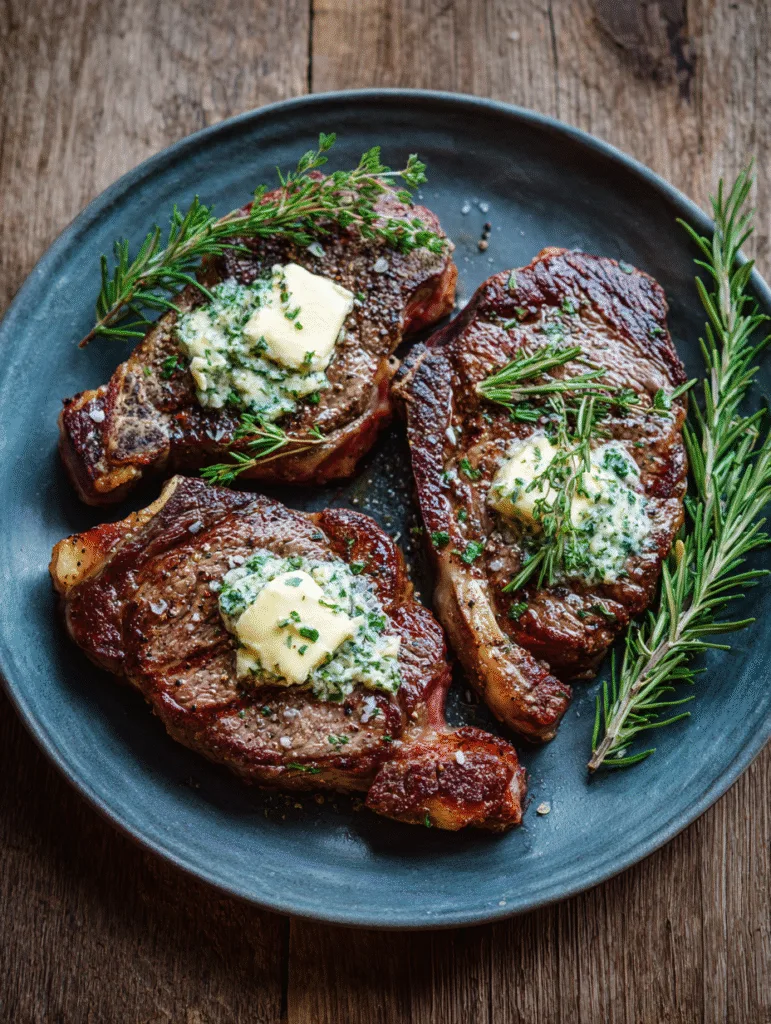
Ribeye steak with garlic butter is one of the most flavorful and juicy cuts of beef you can prepare at home. Known for its rich marbling and tender texture, ribeye becomes even more irresistible when seared or grilled and finished with a sizzling garlic butter sauce. Whether you’re pan-searing a cast iron ribeye or grilling outdoors, this method ensures a mouthwatering, steakhouse-quality result.
This recipe combines the best way to cook ribeye with a simple garlic butter made from fresh herbs, crushed garlic, and butter that melts into the meat. Perfect for carnivore dishes or special occasions, it’s a reliable go-to when you want a juicy ribeye steak every time.
In This Article
In This Recipe
How to Make Ribeye Steak with Garlic Butter at Home
Making ribeye steak with garlic butter at home is all about technique, timing, and choosing the right ingredients. This dish might sound restaurant-level, but with a few tips and the right setup, you can cook a juicy ribeye steak that rivals any steakhouse, right in your own kitchen.
Ribeye is prized for its marbling, which means it stays tender and flavorful even at high heat. Whether you’re working with a hot cast-iron skillet or an outdoor grill, the process is about building a perfect sear on the outside while keeping the inside tender and juicy. The garlic butter adds richness and depth, elevating the beefy flavor without overpowering it.
You won’t need fancy tools or obscure ingredients, just quality steak, garlic, butter, and a little patience. And once you learn how to cook ribeye steak with garlic butter properly, it becomes one of those core carnivore dishes you’ll come back to again and again.
In the full recipe card coming up, you’ll find everything laid out clearly: from prep time to resting instructions. But before we get there, let’s break down what makes ribeye so special, and how to choose, prep, and cook it for maximum flavor and tenderness.
PrintRestaurant-Style Ribeye Steak with Garlic Herb Butter
This restaurant-style ribeye steak with garlic herb butter delivers melt-in-your-mouth tenderness, golden sear, and irresistible aroma. With simple ingredients and a foolproof method, you can recreate a steakhouse favorite right in your kitchen, juicy, rich, and packed with buttery flavor. Perfect for special dinners, carnivore dishes, or anytime you crave a perfectly cooked steak.
- Prep Time: 10 minutes (+30 minutes resting)
- Cook Time: 10–12 minutes
- Total Time: 45–50 minutes
- Yield: 4–6 servings
- Category: Main Dish
- Method: Pan-Searing (or Grill + Butter Finish)
- Cuisine: American / Steakhouse Style
Ingredients
For the Steak
-
2 ribeye steaks (1.25–1.5 inches thick, about 2 lbs total)
-
Kosher salt (to taste)
-
Freshly cracked black pepper (to taste)
-
2 tablespoons neutral oil (avocado or grapeseed)
For the Garlic Herb Butter
-
4 tablespoons unsalted butter (softened)
-
3 garlic cloves (minced or crushed)
-
2 sprigs fresh thyme or rosemary
-
1 tablespoon chopped fresh parsley
-
½ teaspoon lemon zest (optional)
-
Salt and black pepper (to taste)
Instructions
-
Bring steak to room temperature, Let your ribeye rest for 20–30 minutes before cooking.
-
Preheat your cast-iron skillet over medium-high heat until very hot (just starting to smoke).
-
Pat steak dry thoroughly with paper towels, then season both sides generously with salt and pepper.
-
Add oil to the hot skillet, swirl to coat, and place the steak down carefully.
-
Sear the first side without moving it for 3 minutes to develop a crust. Flip and sear the second side for another 3 minutes.
-
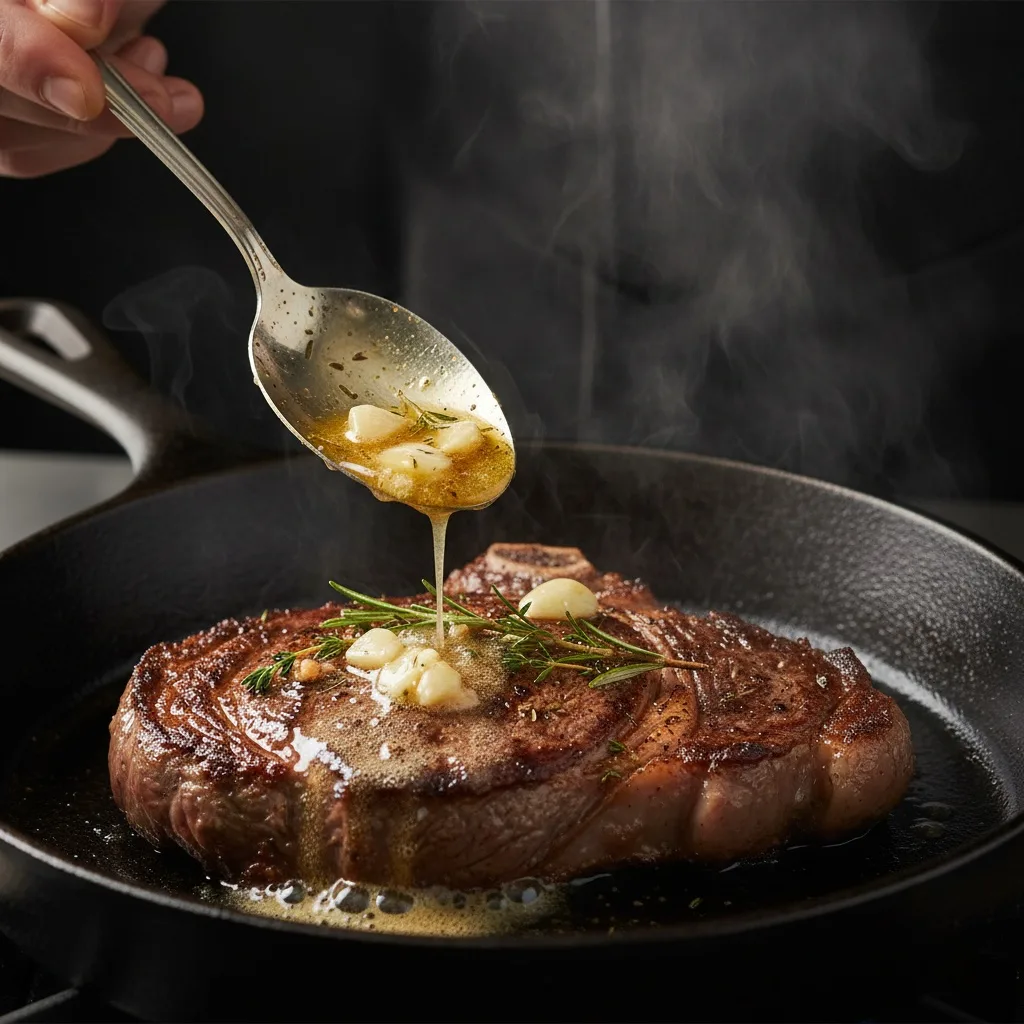
Add butter, garlic, and herbs to the pan. Tilt the skillet slightly and spoon melted butter over the steak for 1–2 minutes while it finishes cooking.
-
Check temperature:
-
Rare: 120–125°F
-
Medium-Rare: 130–135°F
-
Medium: 140–145°F
-
-
Rest the steak for 5–10 minutes on a cutting board, loosely covered with foil.
-
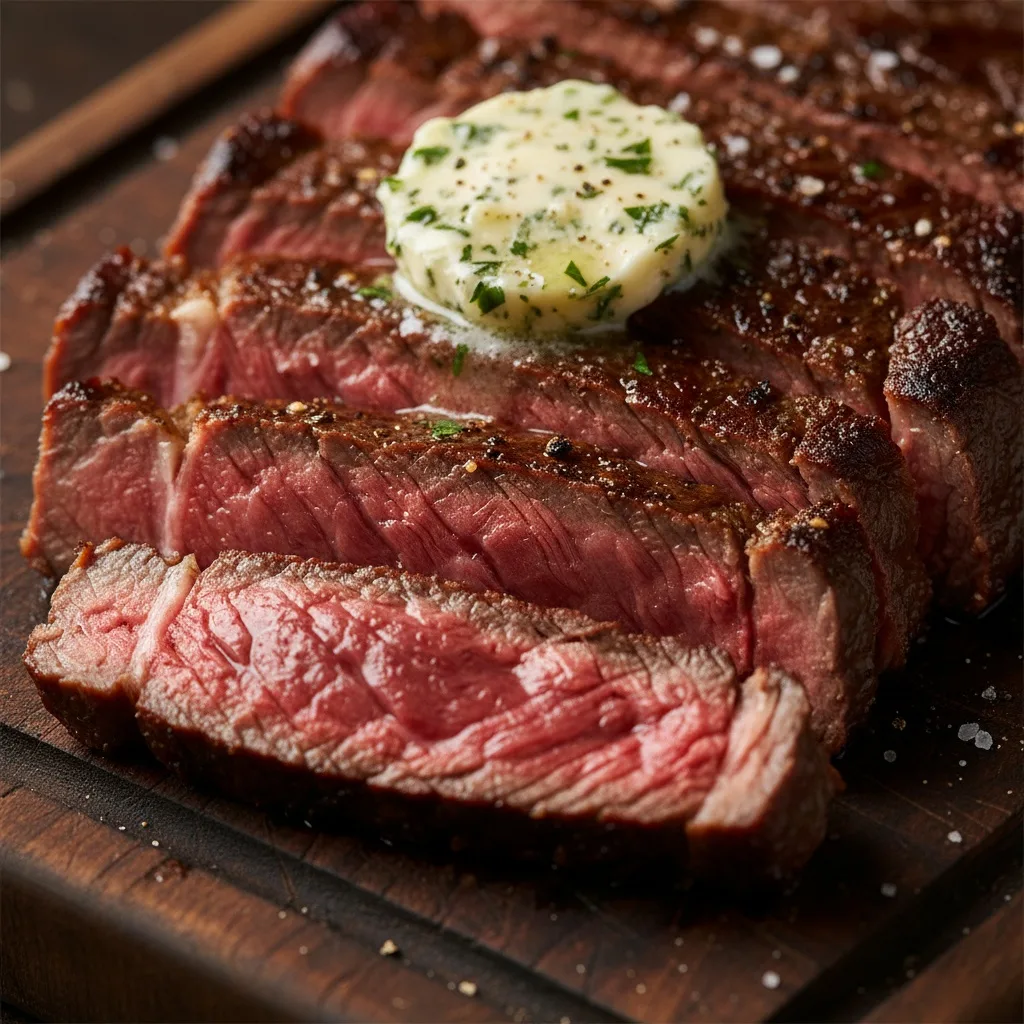
Slice against the grain, drizzle with the remaining garlic butter from the pan, and sprinkle with parsley.
Notes
-
Avoid adding butter too early, it can burn. Add it once both sides are seared.
-
Use unsalted butter if you seasoned your steak heavily.
-
For outdoor cooking, grill the steak first, then baste in a hot cast-iron skillet.
-
Always rest the steak to keep it juicy.
Why Ribeye Is Perfect for Garlic Butter Steak
Ribeye steak stands out as one of the most flavorful and juicy cuts you can buy, and it’s the ideal match for garlic butter. If you’ve ever wondered why steakhouse menus often highlight ribeye, it’s because of its unmatched combination of tenderness, fat content, and beefy richness. When cooked correctly, especially in a cast iron pan or on the grill, ribeye delivers a mouthwatering experience with every bite.
What Makes Ribeye Exceptional
Ribeye is cut from the rib section of the cow, typically between ribs six and twelve. This area doesn’t bear much weight, which means the meat stays tender while developing rich marbling, thin ribbons of fat that run through the muscle. During cooking, this fat melts and naturally bastes the steak from within, resulting in a juicy ribeye steak that’s full of deep, savory flavor.
Unlike leaner cuts like sirloin or filet, ribeye offers more fat and flavor, making it especially suited for high-heat searing or grilling. That fat also acts as a flavor carrier, absorbing garlic and herb infusions from the butter without losing the beef’s integrity.
How Marbling Affects Juiciness and Flavor
The marbling in a ribeye steak isn’t just for looks, it’s essential to the final texture and taste. As the steak cooks, the fat renders slowly, adding moisture and enhancing the natural umami of the beef. This is why a well-marbled ribeye stays juicy even when cooked to medium or medium-well.
When you finish the steak with garlic butter, the melted fat from the steak blends with the butter and aromatics, creating an intensely flavorful glaze that clings to every surface. This layering of fat, garlic, and herbs is what makes garlic butter ribeye so popular among carnivore dishes.
Ribeye vs Other Cuts
Compared to other popular steak cuts:
- Sirloin is leaner and more affordable but lacks the rich flavor and tenderness of ribeye.
- Filet mignon is tender but very lean, which can make it less juicy and more reliant on sauces or bacon wraps.
- Strip steak (New York strip) has good flavor and a firmer texture but doesn’t offer the same buttery finish.
Ribeye’s marbling and forgiving nature make it the best way to cook a steak with garlic butter, especially if you’re using a high-heat method like cast iron or grill cooking. It’s hard to overcook if you follow the right steps, and the flavor payoff is unmatched.
If you’re new to the carnivore lifestyle, check out our Best Cuts of Meat for Carnivore Diet guide, it covers ribeye, strip, and other nutrient-rich cuts perfect for meat-based recipes.hed.
Preparing the Ribeye – From Butcher to Skillet or Grill
Before you ever turn on the stove or fire up the grill, the quality of your ribeye and how you prep it make all the difference. A juicy ribeye steak with garlic butter starts with the right cut, proper handling, and a few crucial techniques that help you get steakhouse-level results at home.
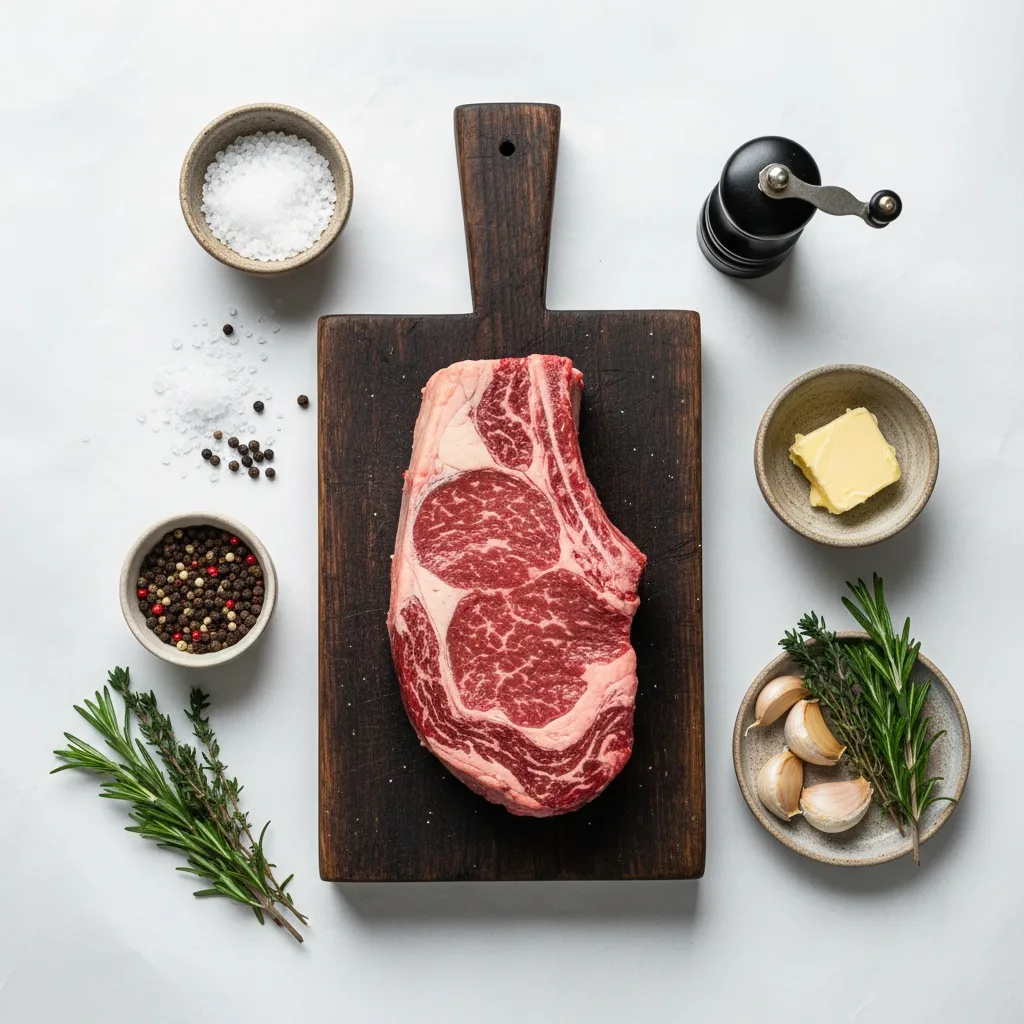
Choosing the Right Ribeye Steak
When shopping for ribeye, look for:
- Thickness: Aim for at least 1.25 to 1.5 inches thick. This allows a rich sear while keeping the inside juicy.
- Marbling: Good marbling, those fine white fat streaks, indicates better flavor and tenderness.
- Bone-in vs. Boneless: Both are great options. Bone-in ribeye (also called a cowboy steak or tomahawk if it has a long bone) tends to be more flavorful. Boneless is easier to manage, especially in a skillet.
Pro tip: Ask your butcher for USDA Prime or Certified Angus Beef if available. These higher-grade cuts tend to have superior marbling and texture, making them ideal for garlic butter steak recipes.
Want to explore more about protein-rich cuts and sourcing tips? Visit our Carnivore Diet Grocery List for a complete guide to selecting quality meats and staples for your carnivore kitchen.
Bringing Your Steak to Room Temperature
Letting the steak sit at room temperature for 20 to 30 minutes before cooking helps it cook evenly. Cold steak straight from the fridge tends to sear poorly and cook unevenly, which can result in an overcooked exterior and undercooked center.
Pat the Steak Dry
Moisture is the enemy of a good crust. Pat both sides of the steak with paper towels to ensure it’s bone-dry. A dry surface encourages caramelization, essential for that savory, golden crust you want in a cast iron ribeye or grilled steak.
Season Generously
The best way to cook ribeye starts with simple seasoning. Use:
- Kosher salt or coarse sea salt
- Freshly cracked black pepper
Salt draws out surface moisture initially but then helps the steak form a flavorful crust and penetrate the muscle with seasoning. If you’re using salted butter later, keep the initial salt light, otherwise, season with confidence.
You can add optional dry rubs or crushed herbs like thyme or rosemary, but it’s not required. Ribeye is bold enough to stand on its own, especially once that garlic butter hits the pan.
Optional: Oil the Steak, Not the Pan
Brushing a thin layer of high-smoke-point oil (like avocado or grapeseed) directly onto the steak ensures even browning and prevents sticking, especially important for grill cooking or cast iron searing. Avoid using olive oil, which can smoke or burn at high heat.
Garlic Butter for Ribeye – Crafting the Perfect Butter Sauce
The garlic butter isn’t just a finishing touch, it’s the soul of this steak. Rich, aromatic, and deeply flavorful, garlic butter elevates your ribeye from good to unforgettable. Done right, it enhances the steak’s natural beefiness while adding a velvety, herb-kissed finish that clings to every bite.
Simple Ingredients, Big Impact
To make the best garlic butter for steak, you only need a few ingredients:
- Unsalted butter (or salted, with care)
- Fresh garlic, minced or crushed
- Herbs like thyme, rosemary, or parsley
- Salt and black pepper
- Optional: lemon zest or a tiny squeeze of lemon juice
Unsalted butter gives you full control over seasoning, especially since steak is usually well-salted ahead of time. Salted butter works too, just reduce the initial steak seasoning slightly to avoid overdoing it.
Why Garlic Butter Works So Well
Butter has a low smoke point, so you typically don’t cook your steak in it from the start. Instead, you add it at the end of the cooking process for a few key reasons:
- Flavor fusion: As butter melts into the pan, it mixes with beef drippings to form a savory, nutty, deeply flavored sauce.
- Aromatics release: Garlic, thyme, or rosemary bloom in hot butter, infusing it with fragrance and earthy notes.
- Moisture and shine: Butter adds a glossy finish and keeps the steak juicy.
When spooned over the ribeye during the final moments of cooking, this blend clings to the meat’s surface, creating that irresistible layer of flavor, especially in a cast iron ribeye.
Making Garlic Butter Ahead
Want to make things even easier? You can prep the garlic butter in advance:
- Soften the butter at room temperature.
- Mix with minced garlic, chopped herbs, and a pinch of salt and pepper.
- Shape into a log using parchment paper, then refrigerate or freeze.
Slice off coins of flavored butter and place them directly onto the hot steak after cooking, the butter melts slowly, releasing flavor as the steak rests.
To balance your meal plan, explore our Carnivore Diet 7-Day Meal Plan, it includes daily recipe inspiration and ways to fit ribeye or garlic butter dishes into your weekly rotation.
Herb Pairings for Deeper Flavor
The best herbs for garlic butter steak include:
- Thyme: Woodsy and classic
- Rosemary: Strong, aromatic, pairs beautifully with beef
- Parsley: Fresh and brightens the richness
- Chives: Milder than garlic but complementary
Feel free to mix and match. Just don’t overload the butter, a little goes a long way.
Best Cooking Methods – Pan-Searing vs Grilling for Ribeye Steak
When it comes to cooking a ribeye steak with garlic butter, you have two standout methods: pan-searing and grilling. Both can deliver a flavorful, juicy ribeye steak, but each offers a slightly different experience in terms of crust, control, and flavor. Choosing the best way to cook ribeye depends on your setup, preferences, and desired outcome.
Why Pan-Searing in a Cast Iron Skillet Wins at Home
Pan-searing is often the go-to method for achieving steakhouse-quality results at home, especially when using a cast iron skillet. Here’s why:
- High, even heat: Cast iron retains heat better than other pans, creating that perfect, crispy crust on the outside while keeping the inside tender and pink.
- Ideal for butter-basting: The skillet allows you to add garlic butter directly to the pan during the final minutes of cooking and baste the steak continuously, something harder to replicate on a grill.
- Better control: With a skillet, you can monitor temperature, timing, and butter infusion closely, making it easier to hit medium-rare every time.
For many home cooks, cast iron ribeye is simply the most predictable and flavorful method.
When Grilling Might Be the Better Choice
If you love smoky flavor and a bit of char, grilling is your friend. It gives ribeye an added dimension, the fire-kissed aroma and sear marks that many steak lovers crave.
- Direct flame contact: Perfect for building exterior texture and flavor.
- Smokiness: Especially from wood or charcoal, adds depth you can’t get from stovetop cooking.
- Outdoor enjoyment: Ideal during warmer months or when cooking for a crowd.
However, grilling has downsides too. It’s harder to manage basting with butter and aromatics, and fluctuating heat can make it trickier to nail the perfect doneness, especially for thicker cuts.
Comparison Table: Pan-Searing vs Grilling
| Feature | Cast Iron Sear | Grilling |
|---|---|---|
| Heat Control | Excellent | Variable |
| Crust Formation | Excellent | Good |
| Butter Basting | Easy | Requires extra effort |
| Smoky Flavor | Minimal | High |
| Setup Convenience | Indoor-friendly | Requires outdoor grill |
| Precision | High | Moderate to low |
Final Verdict
If you’re after a juicy ribeye steak with garlic butter and want full control over the cooking process, cast iron is your best bet. For a more rustic, smoky experience, especially in summer, grilling offers great results too, particularly when finished with a quick butter baste.
How to Cook a Ribeye Steak in a Cast Iron Skillet (Step-by-Step)
Cooking a ribeye steak in a cast iron skillet is one of the most reliable ways to achieve a golden-brown crust and a juicy interior. This method, especially when finished with garlic butter, brings out the full richness of the meat and turns your kitchen into a steakhouse.
Step 1: Preheat the Cast Iron Skillet
Before anything touches the pan, it needs to be hot, really hot. Preheat the cast iron over medium-high heat for at least 5 minutes, or until it just begins to smoke. A hot surface ensures a deep sear and prevents sticking.
Step 2: Season the Steak
While the pan heats, season your ribeye generously with kosher salt and freshly cracked black pepper on both sides. For extra flavor, rub with a little oil (like avocado oil) or dry herbs like thyme.
If you’re using salted butter later, consider slightly reducing the salt here.
Step 3: Sear the First Side
Place the steak into the dry skillet. You should hear a loud sizzle. Let it sear untouched for 2.5 to 3 minutes. This builds the crust.
Step 4: Flip and Add Garlic Butter
After flipping, immediately add:
- 2 tablespoons of butter
- 2–3 crushed garlic cloves
- Optional: a sprig or two of thyme or rosemary
Let the butter melt, then tilt the pan slightly and spoon the melted garlic butter over the top of the steak repeatedly. Baste for another 2–3 minutes.
Step 5: Check Doneness
Use an instant-read thermometer inserted into the thickest part:
- Rare: 120–125°F
- Medium-Rare: 130–135°F
- Medium: 140–145°F
- Medium-Well: 150–155°F
- Well Done: 160°F+
Pull the steak off heat about 5°F below your target, as it will continue to cook while resting.
Step 6: Rest Before Slicing
Transfer the steak to a cutting board and tent loosely with foil. Let it rest for 5–10 minutes. This step redistributes the juices so your steak stays moist and tender.
Step 7: Slice and Serve
Slice against the grain and spoon any leftover garlic butter from the pan over the top. Serve immediately with your favorite sides.
How Long Should You Rest Ribeye Steak and Why It Matters
Resting your ribeye steak after cooking is just as important as searing it to perfection. It might be tempting to slice into your garlic butter steak as soon as it comes off the heat, but doing so can cost you flavor, tenderness, and juiciness.
Why Resting Makes a Difference
When steak cooks, the heat forces the juices toward the center of the meat. If you cut into it immediately, those juices spill out and pool on the plate, leaving your ribeye drier than it should be.
Letting the steak rest gives the muscle fibers time to relax and reabsorb some of the flavorful juices. This makes every bite more tender and ensures that your steak stays juicy throughout.
How Long to Rest Ribeye Steak
For most 1.25 to 1.5-inch thick ribeye steaks, a resting period of 5 to 10 minutes is ideal. Thicker steaks (like bone-in ribeye or tomahawk cuts) may benefit from a slightly longer rest, up to 15 minutes.
Use this simple rule:
- 1-inch thick steak: Rest for 5 minutes
- 1.5-inch steak or thicker: Rest for 7–10 minutes
- Bone-in steak: Rest for 10–15 minutes
Rest the steak on a cutting board, loosely tented with foil. Avoid sealing it tightly, which can cause it to steam and soften the crust.
What Happens If You Skip the Rest
If you skip resting:
- The steak loses up to 30% more juice
- Texture becomes tougher and less appealing
- Garlic butter may not fully soak into the meat
- Crust can turn mushy if covered too tightly
In short, resting allows your ribeye steak to reach its full potential, tender, flavorful, and infused with every drop of that golden garlic butter.
Optimal Internal Temperature for Medium-Rare Ribeye (and Other Doneness Levels)
Getting the perfect ribeye steak with garlic butter isn’t just about flavor, it’s also about temperature. Hitting the right internal temperature ensures your steak is cooked exactly to your liking, from rare to well done, while preserving tenderness and juiciness.
Why Temperature Control Matters
Ribeye is a beautifully marbled cut, which means fat content is high. That fat needs enough heat to render and create flavor, but not so much that it dries out the meat. Cooking to the correct internal temperature allows the marbling to melt just enough to baste the meat without overcooking it.
Whether you’re pan-searing in cast iron or grilling over high heat, monitoring temperature with an instant-read thermometer gives consistent, professional results every time.
Recommended Internal Temperatures for Ribeye Steak
Here’s a guide for your desired doneness level:
| Doneness | Internal Temperature | Visual Cue | Texture |
|---|---|---|---|
| Rare | 120–125°F (49–52°C) | Cool red center | Very soft |
| Medium-Rare | 130–135°F (54–57°C) | Warm red center | Tender and juicy |
| Medium | 140–145°F (60–63°C) | Warm pink center | Slightly firm |
| Medium-Well | 150–155°F (65–68°C) | Light pink center | Firm |
| Well Done | 160°F+ (71°C+) | No pink, brown throughout | Dense and dry |
Why Medium-Rare Is the Sweet Spot
Most chefs and home cooks agree that medium-rare is the ideal doneness for a ribeye steak. At this temperature range, the internal fat has melted enough to flavor and moisten the meat, while the muscle fibers stay tender. The result? A buttery, juicy steak with maximum flavor.
For a ribeye cooked in garlic butter, medium-rare lets the butter soak in without burning or separating. The result is a steak that’s juicy, flavorful, and evenly cooked from edge to center.
Pro Tip: Pull Early, Rest Properly
Always remove the steak from heat 5°F before your target temperature. The internal temperature continues to rise slightly as the steak rests (this is called carryover cooking). For instance:
- If you want medium-rare (135°F), pull it off the heat at about 130°F.
- For medium (145°F), remove at around 140°F.
Then let the steak rest 5–10 minutes before slicing so juices redistribute and the garlic butter settles perfectly across the surface.
Flavor Boost – Herbs and Pairings That Complement Garlic Butter Ribeye
What makes a ribeye steak with garlic butter truly shine isn’t just the sear or the doneness, it’s the finishing touches. Garlic butter adds richness and aroma, but fresh herbs and smart side pairings elevate your steak into a complete, balanced dish worthy of a special occasion or a carnivore feast.
The Best Herbs for Garlic Butter Ribeye
Butter and beef both have a high fat content, which makes them excellent carriers for aromatic herbs. The right herbs don’t just add flavor; they cut through the richness and create complexity.
Here are the best choices:
- Thyme: Earthy and slightly minty, thyme complements the buttery fat of ribeye without overpowering it. It’s the classic herb used in most steakhouse garlic butter recipes.
- Rosemary: Intensely fragrant, rosemary pairs beautifully with high-fat cuts. Add it during the last minute of cooking so it releases its oils into the butter.
- Parsley: Fresh, bright, and clean, parsley adds a pop of color and freshness that balances the richness of garlic butter.
- Chives: Subtle onion flavor that adds depth without sharpness.
- Oregano or tarragon (optional): For an herby twist if you want a slightly different flavor profile.
Combine these herbs in moderation, too many can overwhelm the natural flavor of your juicy ribeye steak.
Why Garlic Butter Enhances Steak Flavor
Garlic butter is more than a topping; it’s a flavor enhancer that amplifies everything ribeye already does well. When the butter melts in a hot pan, it mixes with the steak’s rendered fat and the browned bits (fond) at the bottom of the pan, creating a luxurious sauce that coats the meat perfectly.
The garlic infuses this mixture with warmth and savoriness, while herbs contribute freshness and aroma. Together, they create that mouthwatering depth of flavor that makes garlic butter ribeye unforgettable.
Perfect Side Dishes for Garlic Butter Ribeye
A rich steak needs sides that either balance or complement its intensity. Whether you’re preparing a full meal or serving for guests, here are some perfect pairings:
Light and Fresh Sides
- Grilled asparagus with olive oil and lemon zest
- Green beans almondine with slivered almonds
- Arugula salad with balsamic vinaigrette
- Roasted cherry tomatoes for acidity and color
Hearty and Comforting Sides
- Creamy mashed potatoes or garlic butter smashed potatoes
- Buttered corn on the cob with herbs
- Roasted mushrooms cooked in leftover steak drippings
- Cauliflower mash for a lighter low-carb alternative
Bread & Garnishes
- Crusty bread or baguette for mopping up the garlic butter sauce
- Caramelized onions or grilled shallots for a touch of sweetness
For more serving ideas that pair perfectly with steak nights, see our Carnivore Breakfast Ideas & Recipes, you’ll find easy low-carb sides and morning meals that complement rich dinners beautifully.
Wine and Beverage Pairings
To elevate your ribeye experience even further, pair it with:
- Red wines: Cabernet Sauvignon, Malbec, or Syrah, all have the structure to cut through the steak’s fat.
- Non-alcoholic alternatives: Sparkling grape juice or rosemary-infused lemonade for a refreshing contrast.
Finishing Touches: Presentation and Garnish
- Drizzle leftover garlic butter from the skillet over sliced steak for shine and flavor.
- Sprinkle with freshly chopped parsley before serving.
- Add a slice of chilled compound butter on top right before plating, it will melt slowly over the warm steak.
Why Pairing Matters
Pairing the right sides and herbs turns your ribeye into a balanced experience. Garlic butter brings warmth and depth; herbs bring freshness; sides add variety in texture and flavor. Together, they make your ribeye steak recipe feel complete, elegant, and indulgent without being heavy.
Common Mistakes to Avoid When Cooking Ribeye with Garlic Butter
Even with a great cut of meat, it’s easy to make small mistakes that can turn your ribeye from juicy and flavorful to tough or greasy. Understanding what not to do is just as important as following the recipe. Here are the most common pitfalls, and how to avoid them when making a ribeye steak with garlic butter at home.
1. Starting with a Cold Steak
Cooking a steak straight from the refrigerator leads to uneven results. The outside may overcook before the inside reaches your desired doneness.
Fix: Always let the steak rest at room temperature for 20–30 minutes before cooking. This ensures even heat distribution from edge to center.
2. Not Patting the Steak Dry
Moisture on the surface of your steak prevents a proper sear. Instead of developing a golden crust, the meat will steam and turn gray.
Fix: Pat your steak completely dry with paper towels before seasoning and cooking. This small step makes all the difference in achieving that rich, caramelized crust that defines a great cast iron ribeye.
3. Using Butter Too Early
Butter has a low smoke point, meaning it burns quickly at high heat. If you start cooking with butter from the beginning, you’ll end up with a bitter taste and scorched bits in your pan.
Fix: Begin searing your steak in a small amount of neutral, high-smoke-point oil like avocado or grapeseed oil. Add the butter only in the final 2–3 minutes for basting.
4. Skipping the Resting Step
Cutting into a steak immediately after cooking causes the juices to flow out onto your plate instead of staying in the meat.
Fix: Always rest your steak for 5–10 minutes before slicing. During this time, the juices redistribute, making your juicy ribeye steak tender and full of flavor.
5. Overcrowding the Pan or Grill
Cooking more than one steak in a small pan or crowding them on the grill lowers the temperature of your cooking surface. This prevents the Maillard reaction, the chemical process responsible for browning and flavor.
Fix: Cook one or two steaks at a time, leaving space around each piece. If you’re serving multiple people, cook in batches and keep finished steaks warm in a low oven.
6. Overcooking the Ribeye
Ribeye’s rich marbling helps prevent dryness, but overcooking still leads to a chewy texture and less buttery flavor.
Fix: Use an instant-read thermometer and remove the steak from heat about 5°F before your target temperature. For example, if you want medium-rare (135°F), take it off the heat at around 130°F.
7. Forgetting to Baste Properly
Basting isn’t just for show, it helps distribute garlic and herb flavor evenly while creating a glossy, savory coating.
Fix: As soon as your butter melts, tilt the pan and spoon the garlic butter over the steak repeatedly for 1–2 minutes. This technique gives your steak restaurant-level flavor and appearance.
8. Not Seasoning Enough
Many home cooks under-season their steak, leading to bland results once the butter melts and dilutes the flavor.
Fix: Season more generously than you think you should, especially with coarse salt. A well-seasoned crust will balance perfectly with the garlic butter.
9. Using Cheap or Thin Cuts
A thin steak (less than 1 inch) cooks too fast, giving you little time to develop crust or infuse flavor.
Fix: Choose a thick ribeye, ideally 1.25–1.5 inches thick, from a quality source like USDA Prime or grass-fed beef. The marbling makes all the difference.
10. Neglecting the Sear
That deep, caramelized crust is what locks in flavor and texture. Moving or flipping the steak too soon interrupts this process.
Fix: Let your steak cook undisturbed for several minutes per side. When it naturally releases from the pan, the sear is ready, that’s your cue to flip.
Quick Recap: The Keys to Avoiding Mistakes
- Start with room-temperature steak.
- Pat dry and season generously.
- Use oil first, butter later.
- Baste and rest properly.
- Monitor temperature carefully.
Follow these steps, and you’ll always end up with a juicy ribeye steak in garlic butter that’s rich, flavorful, and beautifully cooked inside and out.
FAQ – Common Questions About Ribeye Steak with Garlic Butter
1. How do you make garlic butter for ribeye steak?
To make classic garlic butter for steak, combine softened unsalted butter, minced garlic, and fresh herbs like thyme or parsley. Add a pinch of salt and pepper to taste.
For deeper flavor, melt the butter in the pan after your steak is nearly done and baste continuously for 1–2 minutes. The butter absorbs beef drippings, creating a rich sauce that coats the ribeye perfectly.
Pro Tip: You can make garlic butter in advance, roll it into a log using parchment paper, and refrigerate. Slice off a coin and place it on top of a hot steak right before serving.
2. Is ribeye steak better pan-seared or grilled?
Both methods produce excellent results, but each has its advantages:
Pan-searing: Gives more control, allows butter basting, and ensures a caramelized crust. Ideal for indoor cooking.
Grilling: Adds smoky, charred flavor and great grill marks, especially with charcoal or wood.
For the most consistent juicy ribeye steak, pan-searing in a cast iron skillet is often preferred. You can always grill it first and finish with garlic butter in a hot pan for the best of both worlds.
3. What is the best way to cook a ribeye steak in a cast iron skillet?
1- Preheat your skillet until very hot.
2- Pat steak dry and season generously.
3- Sear each side for 2.5–3 minutes without moving.
4- Add butter, garlic, and herbs.
5- Tilt the pan and baste with the melted garlic butter for another 2 minutes.
6- Check temperature with an instant-read thermometer, aim for 130–135°F for medium-rare.
7- Rest the steak for 5–10 minutes before slicing.
This process guarantees even cooking, a flavorful crust, and tender results every time.
4. How long should you rest a ribeye steak after cooking?
Always rest your ribeye for 5 to 10 minutes before cutting. Resting allows the juices to redistribute, keeping the interior moist and tender.
If you slice it too early, those juices spill out onto the cutting board instead of staying inside your steak.
For thicker bone-in ribeyes, rest closer to 10 minutes. Loosely tent with foil to keep it warm, but don’t cover tightly, you’ll lose that beautiful crust.
5. What temperature should ribeye be cooked to for medium-rare?
For medium-rare ribeye, cook until the internal temperature reaches 130–135°F (54–57°C).
Remove it from heat about 5°F earlier, since the temperature will rise slightly while resting.
For reference:
Rare: 120–125°F
Medium: 140–145°F
Medium-well: 150–155°F
Well-done: 160°F+
Medium-rare keeps your ribeye juicy, tender, and full of that signature buttery flavor.
6. Can you use salted butter for garlic butter steak?
Yes, you can. However, salted butter can make your steak too salty if you’ve already seasoned it heavily. If using salted butter, reduce the initial salt on your steak.
Most chefs prefer unsalted butter so they can control the salt level and balance the flavors more precisely.
7. Why do restaurants put butter on steak?
Butter adds shine, flavor, and moisture. When melted over a freshly seared steak, it enhances the texture and mouthfeel.
It also acts as a carrier for aromatics, garlic, rosemary, thyme, infusing the steak with subtle, rich flavor. That’s why nearly every high-end restaurant finishes a ribeye with butter, sometimes called a “monte au beurre”.
8. What herbs pair well with garlic butter ribeye?
The best herbs for garlic butter ribeye are thyme, rosemary, parsley, and chives.
Thyme and rosemary add earthiness that complements beef.
Parsley gives freshness.
Chives bring mild onion notes.
You can experiment with a little oregano or tarragon for a twist, but classic steakhouse flavor always comes from thyme and rosemary.
9. Why is my ribeye not juicy?
Dry ribeye usually means one of three things:
Overcooked steak, pulled too late from heat.
No resting period, juices escaped before reabsorbing.
Improper sear, pan wasn’t hot enough, preventing the crust from sealing in juices.
Use a thermometer, preheat properly, and always rest the steak before slicing. The difference is night and day.
10. How much garlic butter should I use on ribeye?
About 1–2 tablespoons per steak is plenty. You want enough to coat the surface and baste while cooking, not so much that it pools and greases the plate.
You can always add a small pat of compound butter before serving for a luxurious finish.
Conclusion — Master the Art of Ribeye Steak with Garlic Butter
Cooking a ribeye steak with garlic butter at home is more than a recipe, it’s a skill that transforms a simple meal into a gourmet experience. With its rich marbling, deep beef flavor, and tender texture, ribeye is the perfect steak to showcase buttery, garlicky perfection.
When you follow the steps in this guide, from selecting a quality cut, seasoning correctly, and using high heat for a proper sear, to finishing with aromatic garlic butter and resting patiently, you’ll achieve results that rival any steakhouse. The combination of sizzling butter, fragrant herbs, and juicy ribeye will make every bite unforgettable.
Whether you’re pan-searing in cast iron or grilling over open flames, the method stays the same: patience, precision, and respect for the ingredients. Once you master it, this dish becomes a reliable showstopper in your carnivore kitchen.
If you’re passionate about rich, protein-forward recipes and modern carnivore cooking, connect with our community for more inspiration and tips:
👉 Follow Carnivore Movement on Facebook, explore recipes, cooking reels, and steak techniques shared daily.
👉 Discover ideas on Carnivore Movement on Pinterest, pin your favorite steak and garlic butter creations to revisit anytime.
From sizzling cast-iron ribeyes to creative carnivore dishes, you’ll find endless ways to perfect your craft and share the joy of real, flavorful cooking.